Introduction
Failure is often regarded as a devastating endpoint, marked by disappointment and halted progress. Yet, emerging psychological research and real-life examples reveal that failure, instead of representing a freefall, acts more as a flight plan—guiding growth, learning, and ongoing improvement (Edkins, 2018). By reframing setbacks as navigational markers, individuals and organizations can leverage failure to chart a deliberate course towards success.

The Psychology of Failure
Perception of failure is deeply entwined with emotion and cognition. As Graham Edkins (2018) explains, aviation examiners often treat failure not as disqualification but as an opportunity for reflection and strategic recalibration. Psychologists note that the distress attached to failure can harm self-efficacy, highlighting the importance of support mechanisms and growth-oriented frameworks (Edkins, 2018; Volz, 2018). Rather than viewing setbacks as evidence of personal inability, research encourages recognizing them as transient events that provide essential feedback for future improvement.
Failure as a Catalyst for Growth: Evidence from Research
Prominent work on growth mindset, such as Dweck’s research, demonstrates that individuals thrive when they perceive abilities as developable (Dweck, 2017). According to Lee et al. (2024), implicit growth mindset measures strongly predict proactive learning after setbacks, suggesting that the belief in self-development mediates how students and professionals respond to failure. Furthermore, educational research supports the concept that failure builds persistence, adaptive learning, and resilience—especially when normalized within classrooms and work environments (Billabong High School, 2025; Volz, 2018).
Navigating Setbacks: Reflection, Analysis, and Action
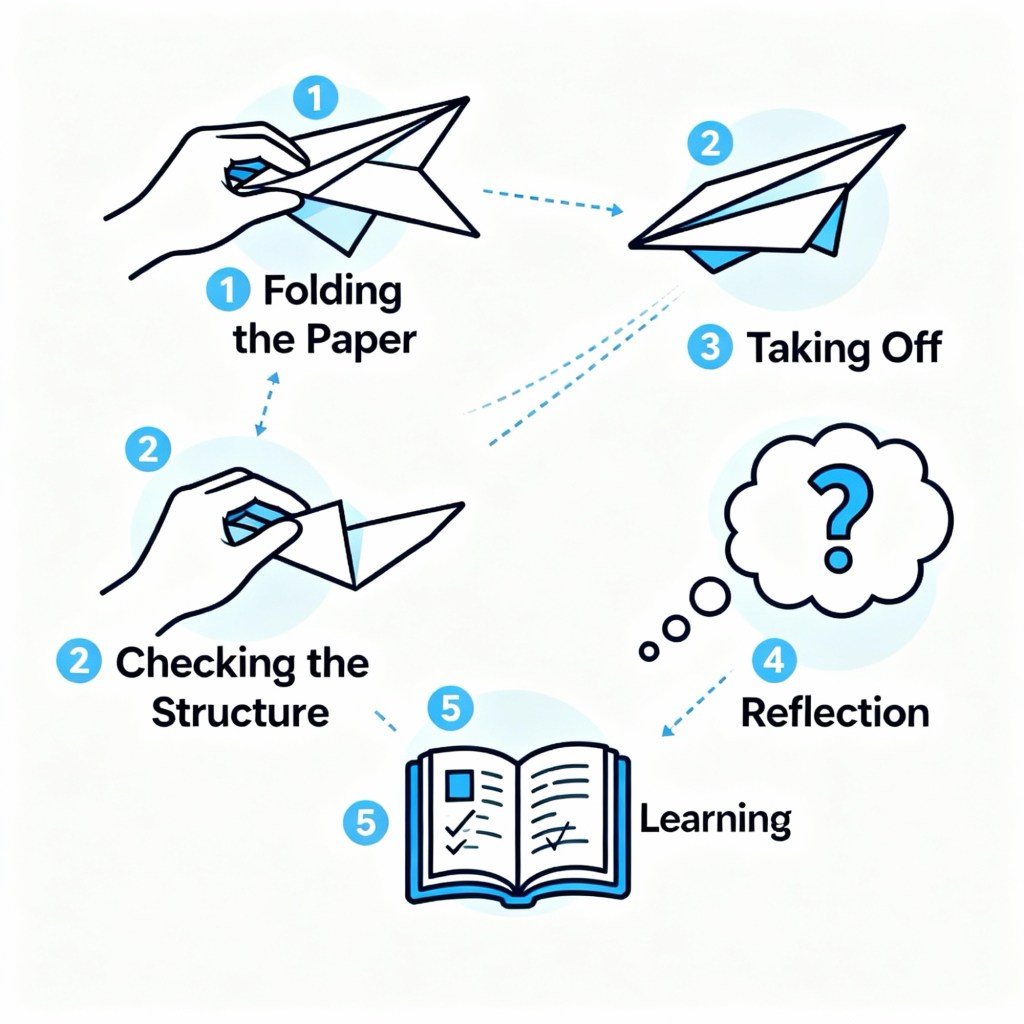
When seeing failure as a flight plan, the focus shifts from avoidance to investigation and adaptation (Warrell, 2023). Reflection and analysis become primary tools—asking honest questions, soliciting feedback, and integrating lessons learned. The “fail fast, learn faster” mantra supports iterative progress, pushing individuals to move from error analysis to constructive action (US Chamber of Commerce, 2023). This approach underpins entrepreneurial and educational success, marking learning as a cyclical rather than static process.
Real-World Case Studies and Organizational Lessons
Studies in aviation, business, and education illustrate how leaders use failure as a foundation for team growth (Edkins, 2018; Upskill Consulting, 2025). In aviation, post-error plan reviews are critical for preventing future mistakes and advancing overall strategic acumen (Edkins, 2018). Organizational cultures that normalize and openly discuss missteps foster psychological safety, making it easier for teams to innovate and adapt (Upskill Consulting, 2025; Leader Influence, 2024).
Practical Strategies for Harnessing Failure
Best practices for individuals and teams include:
• Embracing Transparency: Discussing failures creates collective learning environments (Upskill Consulting, 2025).
• Objective Analysis: Turning to data and honest feedback transforms mistakes into learning opportunities (US Chamber of Commerce, 2023).
• Building Support Networks: Engaging with mentors and peers encourages resilience and mutual growth (Leader Influence, 2024).
• Practicing Self-Compassion: Recognizing that setbacks are universal avoids undue self-blame and preserves motivation (Zo, 2023).
• Reframing Setbacks: Leaders should model vulnerability and encourage risk-taking, treating errors as steps in a navigational process (Upskill Consulting, 2025; Billabong High School, 2025).
Common Pitfalls and Their Prevention
Avoiding, excusing, or denying failure often leads to stagnation and missed opportunities for growth (US Chamber of Commerce, 2023). A culture of accountability and ongoing adaptation is vital; owning mistakes and focusing on continuous improvement supports both personal and organizational development (Leader Influence, 2024).
Conclusion
Treating failure as a flight plan, not a freefall, reframes setbacks as essential steps toward progress. Research underscores the value of failure for building skill, resilience, and innovation. By adopting growth-oriented mindsets and implementing reflection, transparency, and adaptation, individuals and organizations transform failures into powerful tools for long-term success.
References
Billabong High School. (2025, May 12). How failure encourages a growth mindset in education. Retrieved from https://www.billabonghighschool.com/blogs/how-failure-encourages-a-growth-mindset-in-education/%5Bbillabonghighschool%5D
Dweck, C. S. (2017). Mindset: The new psychology of success. Random House.
Edkins, G. (2018, March 7). The psychology of failure: Lessons from flight examiners. LinkedIn. Retrieved from https://www.linkedin.com/pulse/psychology-failure-lessons-from-flight-examiners-graham-edkins%5Blinkedin%5D
Leader Influence. (2024, July 13). I failed! Failure is not the enemy: How to bounce back and grow stronger. Retrieved from https://leaderinfluence.net/2024/07/14/i-failed-failure-is-not-the-enemy-how-to-bounce-back-and-grow-stronge/%5Bleaderinfluence%5D
Lee, L., Lim, S., & Park, J. (2024, February 13). An implicit measure of growth mindset uniquely predicts post-failure learning behavior. Nature. Retrieved from https://www.nature.com/articles/s41598-024-52916-5%5Bnature%5D
Upskill Consulting. (2025, March 11). Failure: Embrace it for powerful learning and growth. Retrieved from https://upskillconsulting.ca/2025/03/12/the-power-of-failure/%5Bupskillconsulting%5D
US Chamber of Commerce. (2023, December 20). How to learn from failure. CO– by US Chamber of Commerce. Retrieved from https://www.uschamber.com/co/start/strategy/how-to-learn-from-failure%5Buschamber%5D
Volz, K. (2018). Cognitive skill degradation: Analysis and evaluation in flight planning. Iowa State University. Retrieved from https://www.imse.iastate.edu/files/2018/07/VolzKatie-thesis.pdf%5Bimse.iastate%5D
Warrell, M. (2023, December 19). Failing is hard, but not near as hard as learning from it. Forbes. Retrieved from https://www.forbes.com/sites/margiewarrell/2023/12/19/think-failure-is-hard-try-learning-from-it/%5Bforbes%5D
Zo, R. (2023, October 24). Mastering the art of resilience: How to bounce back from failure. LinkedIn. Retrieved from https://www.linkedin.com/pulse/mastering-art-resilience-how-bounce-back-from-failure-robin-zo5tc%5Blinkedin%5D


 Human Factors HQ
Leave a comment