
When the mind races and the heart pounds, sometimes the bravest thing we can do is pause and breathe.
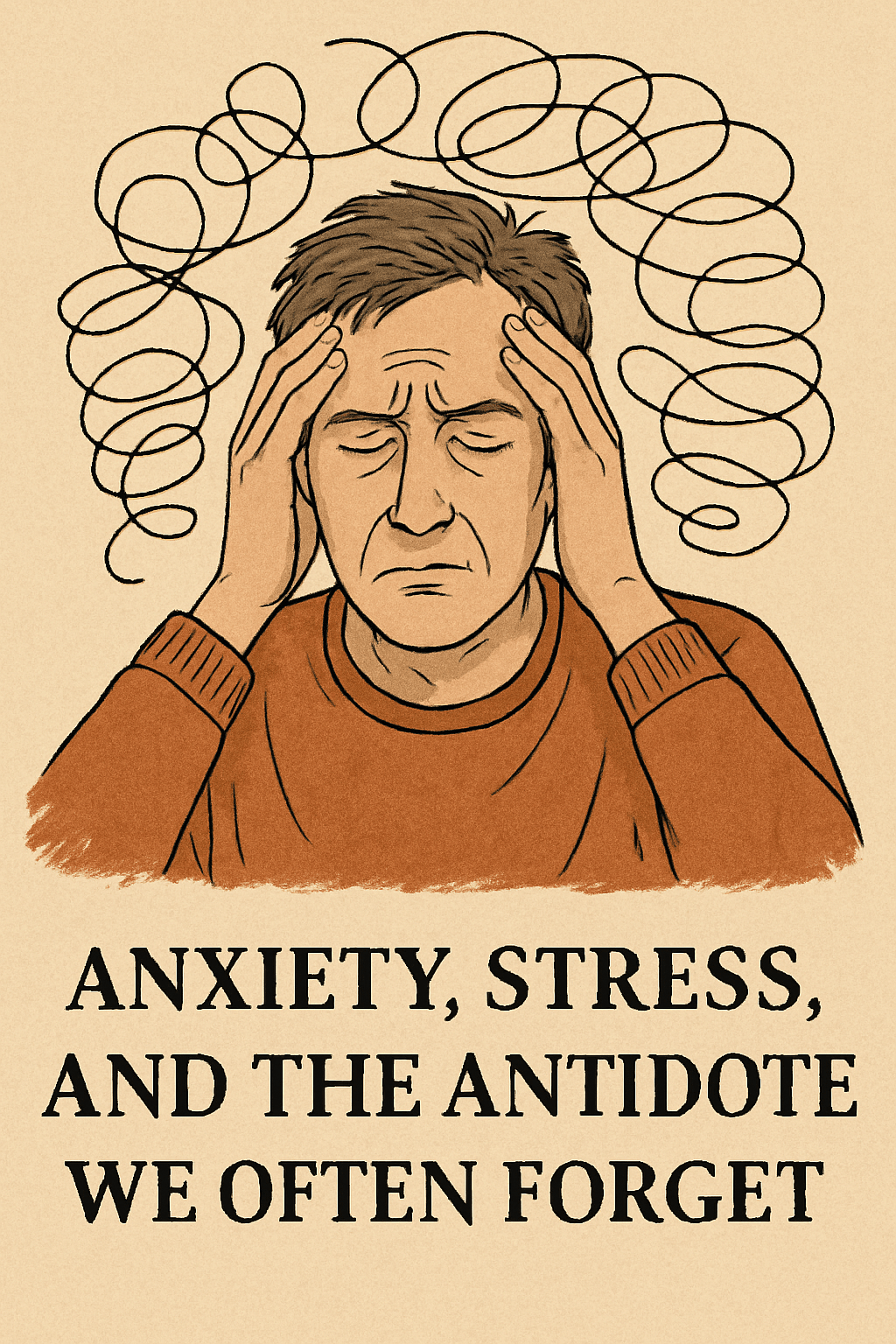
In a world constantly buzzing with alerts, expectations, and the relentless pace of life, it’s no wonder that anxiety and stress have become the uninvited companions of our daily existence. They’re not always loud or obvious. Sometimes they show up quietly—in the clench of a jaw, the scroll through a screen at midnight, or the persistent fatigue that no amount of sleep seems to cure.
Yet, these feelings are profoundly human. They are not failures of character or signs of weakness. They are signals. And like all signals, they can be understood, respected, and responded to—not ignored or silenced
Understanding the Weight
Anxiety is often described as fear of the unknown, while stress is a reaction to known pressures. Together, they create a perfect storm in our bodies and minds, flooding us with cortisol, hijacking our ability to focus, and pulling us away from the present moment.
As Mark Twain famously said,
“I’ve had a lot of worries in my life, most of which never happened.”
This quote perfectly captures the essence of anxiety: our tendency to project, to catastrophize, to imagine worst-case scenarios before they even knock on our door. Stress and anxiety aren’t the result of what’s happening—but how we interpret and carry what’s happening.
A Modern Epidemic with Ancient Roots
The term “stress” in the psychological sense was first coined by Hans Selye in the 1930s. He observed that our bodies respond to demands—both good and bad—with a cascade of physical changes. His work laid the foundation for what we now know as the “fight or flight” response.
Fast forward to today, and we’re fighting battles not of survival but of significance—seeking purpose, validation, connection, and peace in a world that rarely pauses. We now live in a time where burnout is seen as a byproduct of success and being overwhelmed is almost a rite of passage.
Yet, as Brené Brown reminds us:
“We cannot selectively numb emotions. When we numb the painful emotions, we also numb the positive emotions.”
When we suppress stress and anxiety without acknowledging them, we disconnect from the full spectrum of human experience—joy, awe, gratitude, love.
The Antidotes: Rediscovering What Grounds Us
The answer isn’t in eliminating anxiety or stress. That’s not realistic, nor is it necessary. The antidote lies in how we respond—how we anchor ourselves amidst the storms.
1. Acceptance Over Avoidance
Carl Jung once said,
“What you resist, persists.”
By accepting our stressors and anxieties—naming them, understanding them—we reduce their power. Mindfulness practices, for instance, don’t make stress disappear, but they change our relationship to it. We learn to observe without being overwhelmed.
2. Movement as Medicine
Science supports what many ancient traditions already knew: movement is therapy. Physical activity releases endorphins—nature’s mood lifters—and helps discharge built-up tension in the body. But it’s more than biology. Moving your body reminds you that you are alive, capable, and in control of something—however small.
As Friedrich Nietzsche said,
“All truly great thoughts are conceived while walking.”
3. Connection and Conversation
Stress isolates. Anxiety whispers that we’re alone in our struggle. But connection counters that lie.
Glenn Close, who has been a vocal advocate for mental health, stated:
“What mental health needs is more sunlight, more candor, and more unashamed conversation.”
Whether it’s a deep talk with a friend, an honest chat with a therapist, or simply checking in with someone who understands—connection heals.
4. Purpose and Perspective
Sometimes, anxiety stems from a life misaligned with our values. Are we doing what matters? Are we living reactively, or intentionally?
Viktor Frankl, a Holocaust survivor and psychiatrist, wrote in Man’s Search for Meaning:
“When we are no longer able to change a situation, we are challenged to change ourselves.”
Finding meaning—whether through work, service, creativity, or family—can help reframe stress. It shifts the narrative from “I have to do this” to “I get to do this.”
5. Stillness and Simplicity
In the noise of modern life, stillness has become a radical act. Meditation, deep breathing, journaling, or simply sitting in silence for five minutes a day can recalibrate your entire nervous system.
As Blaise Pascal said,
“All of humanity’s problems stem from man’s inability to sit quietly in a room alone.”
Stillness isn’t about doing nothing. It’s about being—fully, honestly, and gently.
6. Humor and Lightness
Don’t underestimate the power of a laugh.
Charlie Chaplin once said,
“A day without laughter is a day wasted.”
Stress loses its grip when we remember the absurdity and impermanence of life. A comedy movie, a funny meme, a playful moment—these are not escapes; they are soul vitamins.
A Final Thought: Grace
Perhaps the greatest antidote of all is grace—for ourselves, and for each other.
Anne Lamott offers a reminder:
“Almost everything will work again if you unplug it for a few minutes… including you.”
We are not machines. We are beautifully imperfect beings navigating a complex world. There will be hard days, but there will also be light. Sometimes the bravest thing you can do is rest. Or say “no.” Or cry. Or begin again.
Let’s Normalize Being Human
Anxiety and stress don’t need to be hidden or fixed. They need to be understood. Let’s normalize conversations about mental health. Let’s hold space for discomfort and growth. Let’s ask each other real questions and listen with our whole hearts.
Because the truth is—everyone’s carrying something. And sometimes, knowing that… is enough.
“You don’t have to control your thoughts. You just have to stop letting them control you.”
— Dan Millman

 Human Factors HQ
Leave a comment