Why it matters?
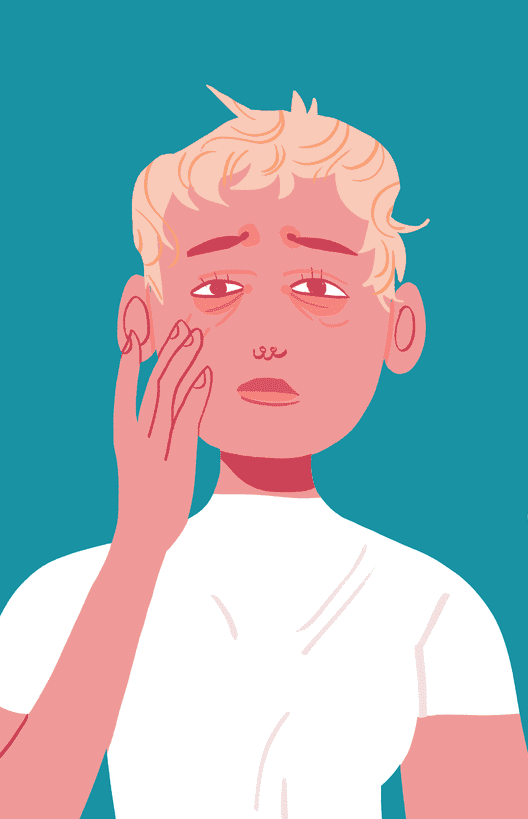
Chronic partial sleep is when a person regularly gets less than the recommended amount of continuous sleep. This differs, in part, based on your age, but also your needs as an individual. Most humans have similar sleep needs, though there are variations. Average sleep requirements based on age that can be used to figure out whether you might be sleep deprived.
| Age Group Based Sleep Need | Sleep Hours Per 24-Hour Period |
| 3 – 11 months | 12 – 16 hours |
| 12 months – 35 months | 11 – 14 hours |
| 3 – 6 years | 10 – 13 hours |
| 6 – 10 years | 9 – 12 hours |
| 11 – 18 years | 8 – 10 hours |
| 18+ years | 7 – 9 hours |
| Older adults | 7 – 8 hours |
SLEEP DEPRIVATION SHORT-TERM HEALTH RISKS
REDUCED IMMUNITY
Sleep is required to renew the immune system. sleep depravation weakens the immune system rendering it unable to fight off infections.
DECREASED COORDINATION & MOTOR SKILLS
Sustained wakefulness of 18 hours (typical day for most people) will impair a person’s mental and motor skills as much as a blood-alcohol level of .05%. After being awake for 24 hours, the impairment is equivalent to 0.10%, or over the legal limit.
INABILITY TO CONCENTRATE
After only one night of inadequate sleep, your ability to concentrate the next morning is reduced and worsens as the day progresses. Any difficulty concentrating, will result is decreases reaction times and impaired work/school performance.
IMPAIRED LEARNING
During sleep, the brain revitalizes memory. It practices and stores new information and experiences that an individual learns during the day. Inadequate sleep will reduce higher-level brain functions, such as planning, organization, and judgement.
IMPAIRED DECISION-MAKING
Sleep deprivation impairs an individuals’ decision making ability as well as the ability to recognize the impairment declines.
OTHER EFFECTS
Sleep loss can cause psychiatric symptoms such as mood and behavioral changes such as short-tempered, anxiety and depression. It can also lead to serious effects such as disorientation, hallucinations, and paranoia.
Physical effects such as generalized discomfort (aches and pains) and gastrointestinal symptoms such as upset stomach or diarrhea can also caused by inadequate sleep. If sleep quantity and/or quality is compromised, an individuals’ body temperature will decrease.
References
Chaput JP, Dutil C, Sampasa-kanyinga H. Sleeping hours: what is the ideal number and how does age impact this? Nat Sci Sleep. 2018;10:421-430. doi:10.2147/NSS.S163071
Medic G, Wille M, Hemels ME. Short- and long-term health consequences of sleep disruption. Nat Sci Sleep. 2017;9:151-161. doi:10.2147/NSS.S134864
Finan PH, Goodin BR, Smith MT. The association of sleep and pain: an update and a path forward. J Pain. 2013;14(12):1539-52. doi:10.1016/j.jpain.2013.08.007

 Human Factors HQ
Leave a comment