
WAY-FINDING
“Human complexity”- Reason of my curiosity.
The term “Way-Finding” is used to describe environment legibility. It includes all the ways in which humans and animals orient themselves in physical space and navigate from one spot to another. Kevin Lynch coined the term in 1960 in his book- The Image of the City (Lynch and Sarah Horton, 2008).
I never paid attention to how I navigate from one point to another before learning about Way-finding. I mean, it’s simple, I know where I have to go, and I get up and walk in that direction or plug coordinates into my smart-phone or GPS and follow turn by turn prompts. But, just as there is nothing simple about human perception, there is nothing simple about way-finding (Goldstein, 2014). Orientation, route decisions, mental mapping, and closure are core components of way-finding.

How accurate is way-finding in humans? OR, can we rely on our way-finding abilities, if we are in an unknown area?
We have always heard stories about people who lost their way. Most of the time, this happens is because we are not really paying attention to our surroundings and our way-finding abilities are less precise than the abilities of other animals. Each person with their experiences will have different levels of navigational abilities. According to Tristan Gooley, author of the “TheNatural Navigator”– ancient people had better navigational abilities because getting lost was a matter of DEATH and LIFE. Nowadays, we rely on technology to help us with way-finding. This brings up another question.
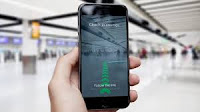
Can relying on technology (smart phone, GPS), degrades our ability to way-find? And, can this reliance also degrade other human perceptual senses?
A study of cab-drivers in London found out that the drivers had bigger and thicker hippocampus (tiny part of the brain, that helps with forming long-term memories, control our navigation abilities, form cognitive maps and spatial orientation) than the average person because their mental-mapping abilities strengthened with practice and experience (Ellard, 2009). So, an average person like me who relies on a smart phone or GPS regularly will probably not have a stronger way-finding abilities, when faced with a challenge to locate a counter, building, or a specific landmark.

“So, get out there and give your hippocampus a regular and challenging wayfinding workout, it may very well thank you for it!” – Andy Levine, 2017
Reference:Colin Ellard (2009). You Are Here, Why we can find our way to the moon, but get lost in the mall anchor books retrieved 20 Feb 2014 Tristan Gooley, The Natural Navigator retrieved 20 Feb 2014 from Caution-www.naturalnavigator.com < Caution-http://www.naturalnavigator.com > Patrick J. Lynch, Sarah Horton, Navigation and Way-finding retrieved 20 Feb 2014 from Caution-http://webstyleguide.com/wsg3/4-interface-design/2-navigation.html < Caution-http://webstyleguide.com/wsg3/4-interface-design/2-navigation.html > Goldstein, E.B. (2014). Sensation and Perception (9th ed.). Cengage Learning. Image courtesy – Google

 Human Factors HQ
Leave a comment